Source crossbow shooting practice target paper for shooting, hunting, and range supplies
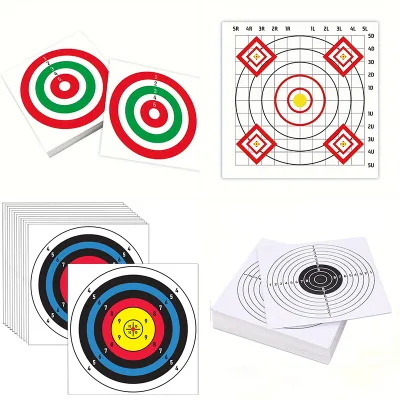
Find 30 listings for crossbow shooting practice target paper with varying MOQs, sizes, and lead times. Buyers can compare specifications for shooting targets paper, silhouette targets, and zombie targets to match their practice needs.
Key considerations
Products List

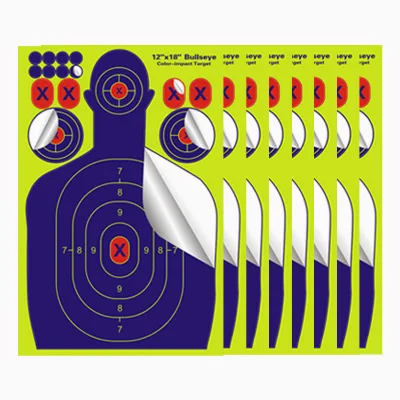
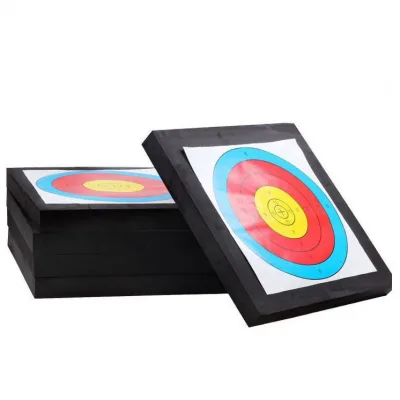
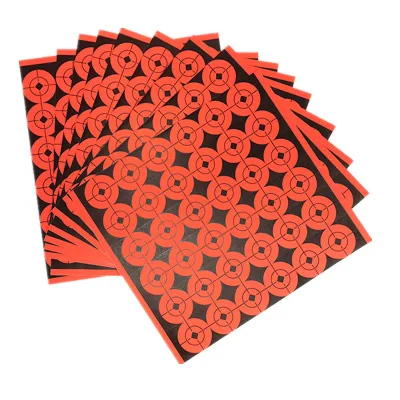
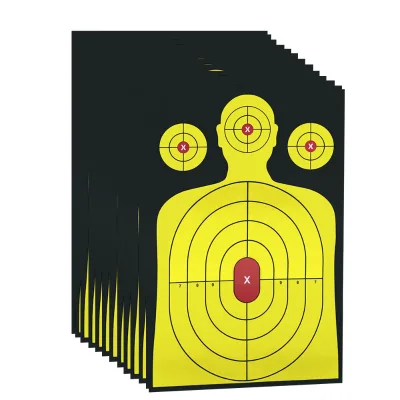
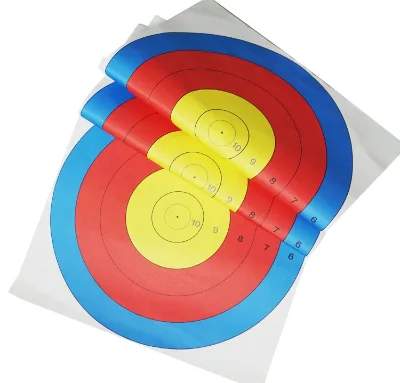
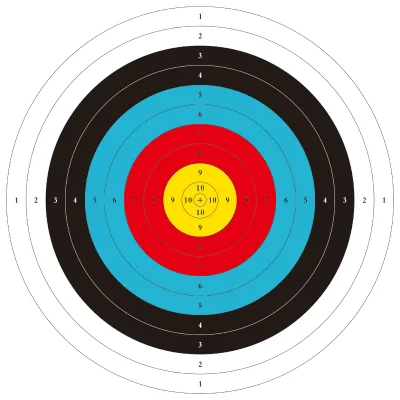



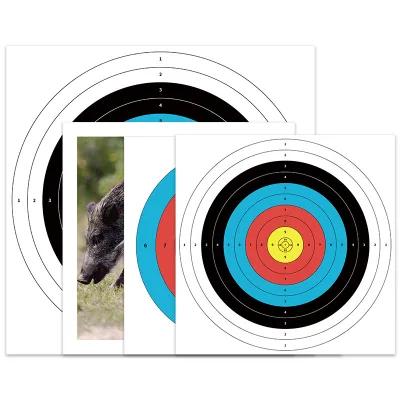
Comprehensive Sourcing Guide
Strategic Sourcing Guide for Crossbow Shooting Practice Target Paper
Procuring specialized target paper for crossbow shooting practice requires a nuanced understanding of material durability, dimensional consistency, and supply chain reliability. Unlike standard paper targets designed for firearms, crossbow targets must withstand the unique kinetic energy and broadhead impact of bolt projectiles. The following guide synthesizes observed market data and technical attributes to assist procurement professionals in evaluating suppliers and selecting products that meet rigorous operational standards. This analysis focuses on the specific characteristics of paper targets, including their construction, packaging, and logistical requirements, ensuring that buyers make informed decisions based on verified product attributes rather than unverified marketing claims.
Technical Specifications and Material Composition
The foundation of an effective shooting target lies in its material composition and physical dimensions. In the current market, paper targets for crossbow practice are predominantly manufactured from coated paper, with specific observations indicating a weight of 157gsm. This density is critical for balancing target stability with the ability to absorb impact without immediate disintegration. The material is often treated to ensure durability, a feature explicitly noted in product listings as essential for both indoor and outdoor practice scenarios. Buyers should verify that the paper possesses sufficient tensile strength to prevent tearing prematurely during high-velocity impacts, which is a common requirement for crossbow bolts equipped with broadheads.
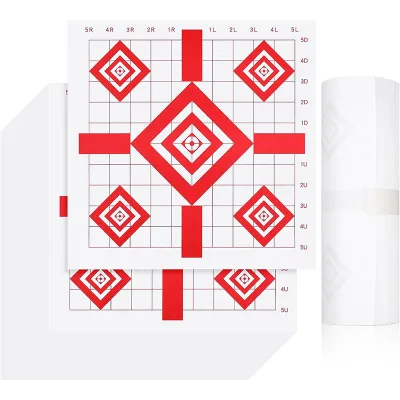
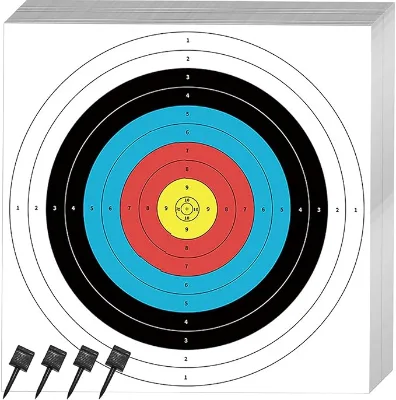
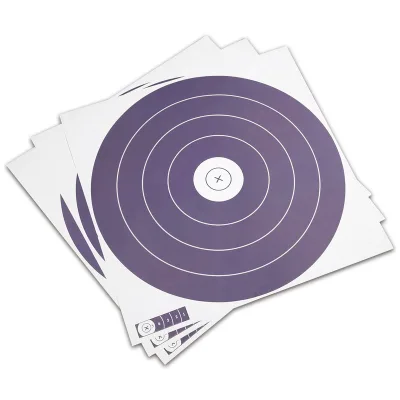
Dimensional specifications vary significantly based on the intended application and target style. Observed product data reveals a range of sizes, from compact options measuring 11 by 17 inches (27.9 by 43.2 cm) to larger formats such as 12 by 20 inches or fully custom dimensions. The width of the target is a crucial variable; for instance, a specific model lists a width of 12 inches, while others offer custom sizing to accommodate different range setups. The thickness of the individual sheet is minimal, often recorded as 0.1 cm, yet the stacking of multiple sheets within a single package can create a dense target block. The single package size varies accordingly, ranging from 22 by 22 by 0.1 cm for smaller rolls or sheets to 51 by 31 by 0.1 cm for larger, more substantial units.
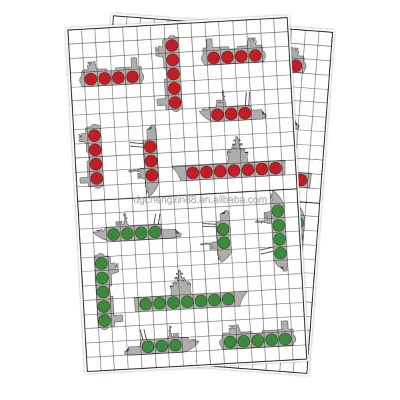
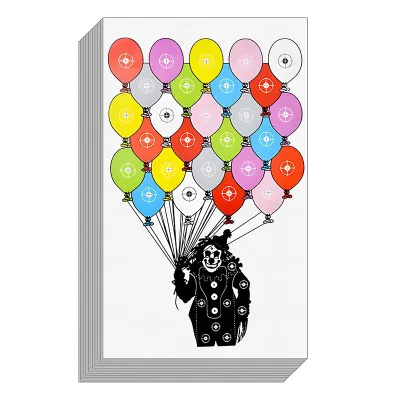
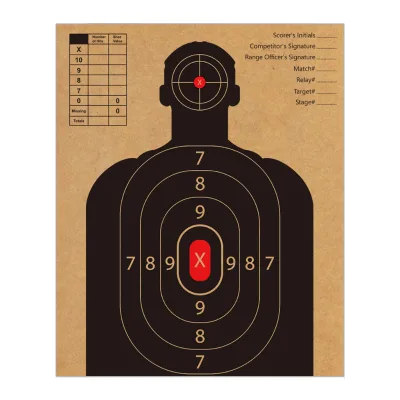
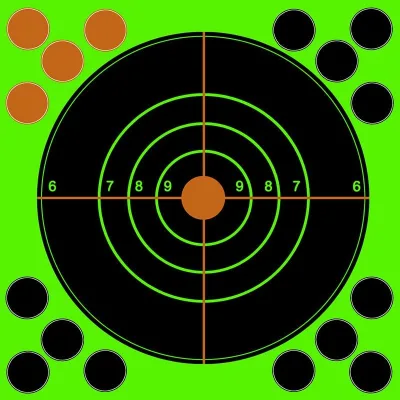
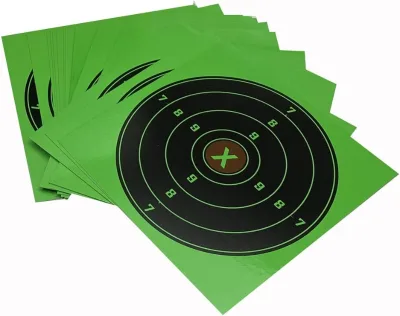
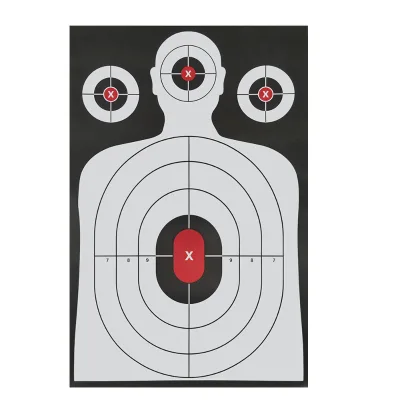
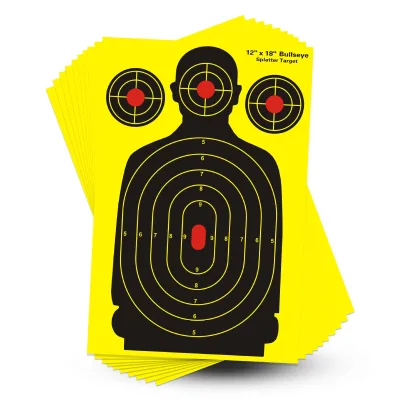
The physical form of the target also dictates its utility. While some products are generic rectangles, others are designed with specific silhouette styles, such as "Zombie" or "Sink The Boats" themes, which are popular for training and recreational shooting. These designs often include strong adhesive properties, allowing them to be mounted directly on backstops or frames without the need for additional hardware. The color profile is typically white or multi-colored, with white being the standard for high-contrast visibility, while colored variants may be used for specific training drills or aesthetic purposes in commercial ranges.
Compliance, Certification, and Safety Verification
When sourcing target paper, particularly for use with high-power crossbows, compliance with safety and environmental standards is paramount. Although specific certification names are not universally mandated for paper targets in all jurisdictions, buyers must verify that the materials used are non-toxic and safe for the environment. The observation of "157gsm coated paper" suggests a specific manufacturing process, but the nature of the coating (e.g., water-based vs. solvent-based) should be confirmed to ensure it does not release harmful fumes or residues during use or disposal.
Safety verification extends to the structural integrity of the target. The target must be capable of stopping the projectile safely without allowing it to pass through or shatter into dangerous fragments. While the provided data lists "Durable" as a key feature, this is an attribute that requires empirical validation. Procurement teams should request test results or case studies demonstrating the target's ability to stop crossbow bolts at various distances and with different bolt weights. Additionally, the "Indoor Outdoor Practice" feature implies that the paper must have some resistance to moisture and UV degradation, though the exact level of weatherproofing should be clarified with the supplier.
Buyers should also consider the adhesive properties of the target. Products listed with "Strong Adhesive" require careful handling to ensure they do not leave residue on range equipment or cause safety hazards if the adhesive fails. Verification of the adhesive's compatibility with various backstop materials is essential to prevent slippage or detachment during high-impact shots.
Cost Drivers and Pricing Dynamics
The cost of crossbow shooting target paper is influenced by several factors, including material quality, customization, and order volume. The observed price range in the market spans from $0.05 to $58 per unit, a wide variance that reflects differences in product type, packaging, and order quantity. Lower-priced items typically correspond to standard, non-customized paper targets with basic packaging, while higher-priced items may include custom printing, specialized coatings, or larger package sizes.
Minimum Order Quantity (MOQ) is a significant cost driver in this sector. The market data indicates MOQs ranging from 100 pieces to 3,000 pieces. Suppliers with higher MOQs often offer lower unit prices due to economies of scale, whereas suppliers with lower MOQs cater to smaller ranges or trial orders but at a premium per unit. Buyers must balance their immediate inventory needs with long-term cost efficiency. For instance, an MOQ of 1,000 pieces might be the threshold for a specific product line, while another supplier might require 3,000 pieces for a custom design.
Packaging and logistics also impact the final cost. The observation of "opp bag or custom" packaging suggests that standard packaging is minimal, but custom packaging adds value and cost. The single gross weight of the product, ranging from 0.023 kg to 0.040 kg per unit, is a critical factor for shipping calculations. While individual units are lightweight, the cumulative weight of large orders can significantly affect freight costs, especially when shipping from major manufacturing hubs like Guangdong, China.
Typical Applications and Usage Scenarios
Crossbow shooting target paper serves a variety of applications, ranging from professional training to recreational use. The primary use cases identified include shooting practice, hunting simulation, and general target acquisition. The "Target Grouping" attribute of "range supplies" indicates that these products are integral to the operation of commercial shooting ranges, where durability and consistency are essential for high-volume usage.
The specific design of the target often dictates its application. "Zombie Shooting Targets" and "Sink The Boats" designs are particularly suited for recreational shooting clubs and family-friendly ranges, offering an engaging experience that mimics real-world scenarios. These targets are often used for skill development, where the visual feedback of hitting a specific zone is crucial. In contrast, generic white targets are preferred for precision training, where the focus is on accuracy and grouping rather than thematic engagement.
The "Bow Type" specification of "Crossbow" confirms that these targets are specifically engineered for the unique demands of crossbow shooting. Unlike rifle targets, crossbow targets must handle the broader impact area and higher kinetic energy of bolts. The "Sport Type" of "target shooting" further reinforces the professional nature of these products, suggesting they are suitable for competitive environments as well as casual practice.
Supplier Evaluation and Quality Control
Evaluating suppliers for crossbow target paper requires a rigorous assessment of their production capabilities and quality control processes. The "Place of Origin" for many products is Guangdong, China, a region known for its manufacturing prowess in paper products. However, buyers should not assume that all products from this region meet the same quality standards. It is essential to verify the supplier's production capacity, lead times, and consistency in meeting specifications.
Quality control should focus on the consistency of the paper weight, the uniformity of the coating, and the reliability of the adhesive. Suppliers should provide samples for testing before committing to large orders. The "Lead Time" for production varies, with observed ranges from 7-15 working days to 15-20 working days. Buyers must account for these timelines in their procurement planning, especially for time-sensitive orders.
Payment terms are another critical factor in supplier evaluation. The standard term observed is "T/T" (Telegraphic Transfer), which is common in international trade. Buyers should negotiate terms that protect their interests, such as partial payments upon order confirmation and the remainder upon shipment or inspection. The "Selling Units" being "Single item" suggests that suppliers are flexible in their order sizes, but buyers should confirm whether bulk discounts are available for larger orders.
Long-Term Procurement Considerations
Sourcing crossbow target paper is not a one-time transaction but a long-term relationship that requires strategic planning. Buyers should consider the scalability of their orders, the availability of custom designs, and the supplier's ability to adapt to changing market demands. The "Model Number" variations, such as CX20260512-1 or CX20241012-1, indicate a dynamic product line that evolves over time. Buyers should ensure that their suppliers can maintain continuity in product specifications even as models are updated.
Sustainability is also becoming a key consideration in procurement. While the current data does not explicitly mention eco-friendly certifications, buyers should inquire about the recyclability of the paper and the environmental impact of the coating process. As regulations tighten and consumer preferences shift towards sustainable products, suppliers who can demonstrate environmental responsibility will have a competitive advantage.
Finally, buyers should establish clear communication channels with their suppliers to ensure that any issues regarding quality, delivery, or specifications are addressed promptly. The "Package" type, whether "opp" or custom, should be agreed upon in advance to avoid misunderstandings. By focusing on these long-term considerations, buyers can build a resilient supply chain that supports their operational needs and ensures the safety and effectiveness of their shooting practice environments.
Comparative Analysis of Product Attributes
To facilitate decision-making, the following table summarizes key attributes observed across different product listings. This comparison highlights the variability in specifications and helps buyers identify the most suitable options for their specific needs.
| Attribute | Product A (Generic) | Product B (Silhouette) | Product C (Zombie/Custom) |
|---|---|---|---|
| Material | Paper | 157gsm coated paper | Paper |
| Size | Custom | 1117 inch (27.943.2cm) | 12*20 inch or custom |
| MOQ | 1000 pcs | 100 pcs | 3000 pcs |
| Lead Time | 10-15 Working Days | 7-15 Working Days | 15-20 Working Days |
| Target Style | Generic | Silhouette | Zombie / Stickers |
| Adhesive | Not specified | Not specified | Strong Adhesive |
| Color | Multi | White | White, Colored |
| Feature | Durable | Durable | Durable, Indoor Outdoor |
This table illustrates the trade-offs between customization, order volume, and lead time. Buyers must weigh these factors against their operational requirements to select the optimal product. For instance, a range requiring immediate stock might opt for the lower MOQ option, while a large-scale operation might prioritize the custom options with higher durability features. By carefully analyzing these attributes, procurement professionals can make informed decisions that align with their strategic goals and budget constraints.
FAQs
What material is used for crossbow shooting practice target paper?
The product uses 157gsm coated paper designed for durability. This specific weight balances stability with impact absorption, making it suitable for high-velocity crossbow bolts without immediate disintegration during practice sessions.
Which sizes are available for shooting targets paper?
Available sizes include 11 by 17 inches and 12 by 20 inches, with custom options also offered. These dimensions accommodate various range setups, ensuring flexibility for both indoor and outdoor practice environments.
How long is the lead time for production?
Lead times range from 7 to 20 working days depending on the specific model. Buyers should plan their procurement schedule around these windows to ensure timely delivery for their shooting range operations.
Can I order with a low minimum quantity?
Minimum order quantities vary from 100 to 3,000 pieces based on the product model. Lower MOQs allow for smaller trial orders, while higher volumes often secure better pricing through economies of scale.
Where are these target paper products manufactured?
Products originate from Guangdong, China, a known hub for paper manufacturing. This location supports efficient production and logistics, though buyers should verify specific factory capabilities for their quality requirements.
What packaging options are provided for the targets?
Standard packaging includes OPP bags, with custom packaging available upon request. This ensures the targets remain protected during transit while allowing suppliers to meet specific branding or logistical needs.